ETL listedAn independent lab shock-tested and fire-tested the driver before the mark went on.
2-year limited warrantyPrinted per product, alongside the retailer 30-day return window.
50,000 rated hoursPast twenty years of evenings at six hours a night on one fixture.
Mercury-freeA dropped tube is a broom problem, not a hazmat sweep.
Match the tube to the socket you already have
Tubes from 2FT to 5FT, integrated shop lights, a waterproof cooler fixture, and a 16,100-lumen corn bulb.
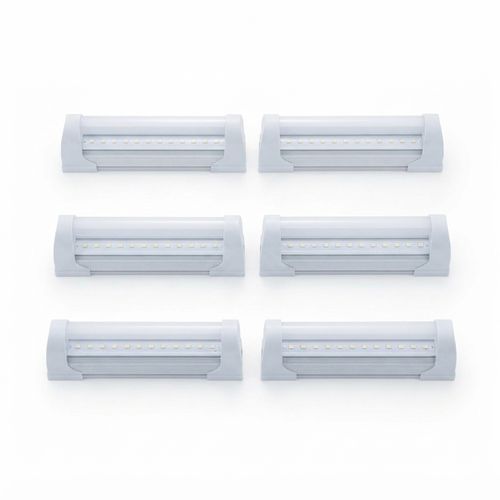
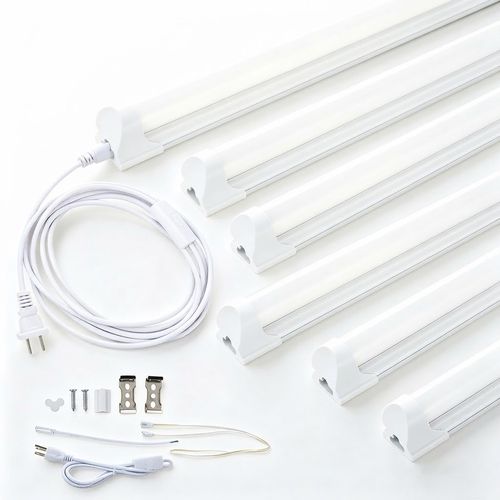
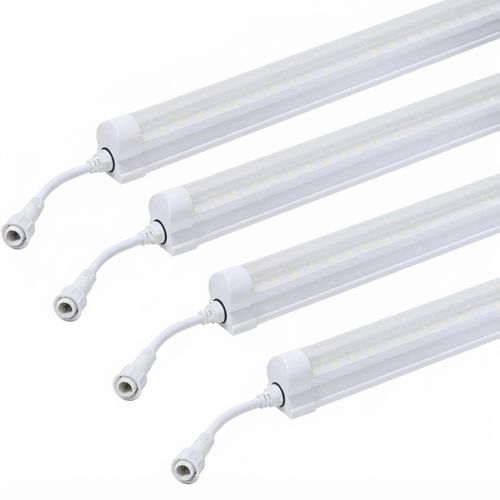
4FT 24W Linkable LED Shop Light, 6-Pack
4.6 (144 verified reviews)
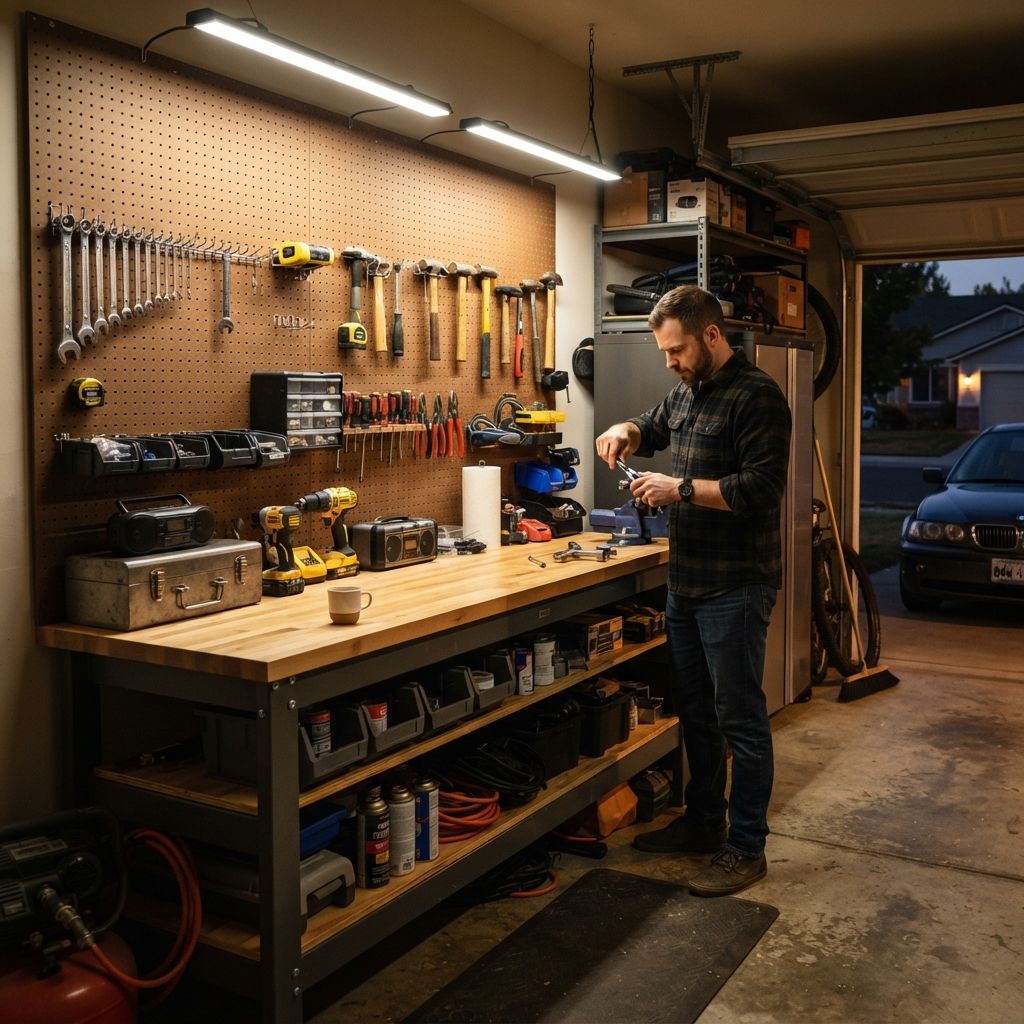
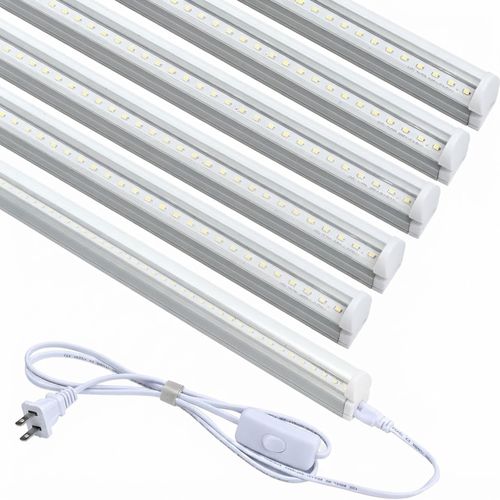
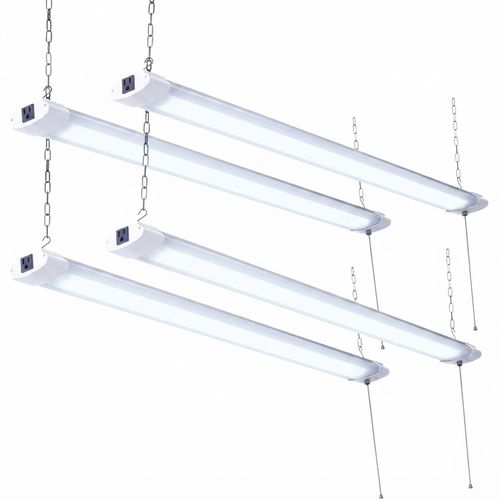
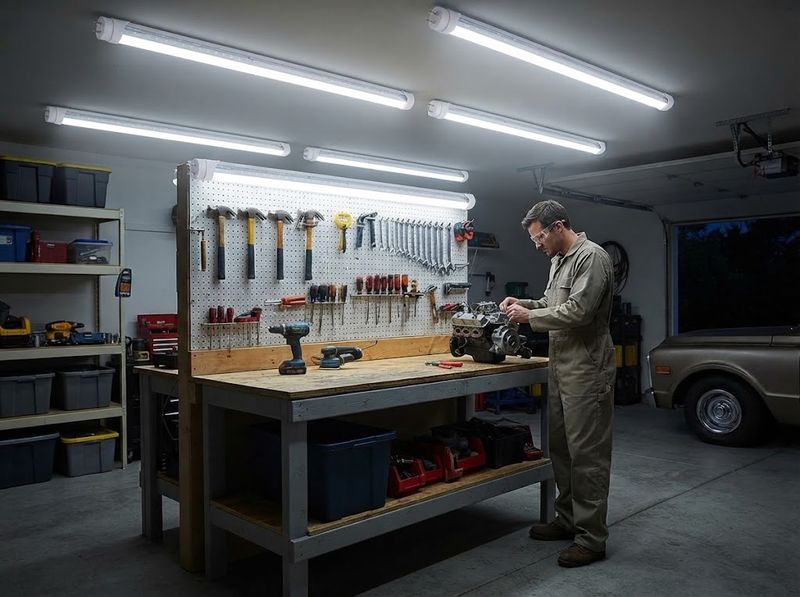
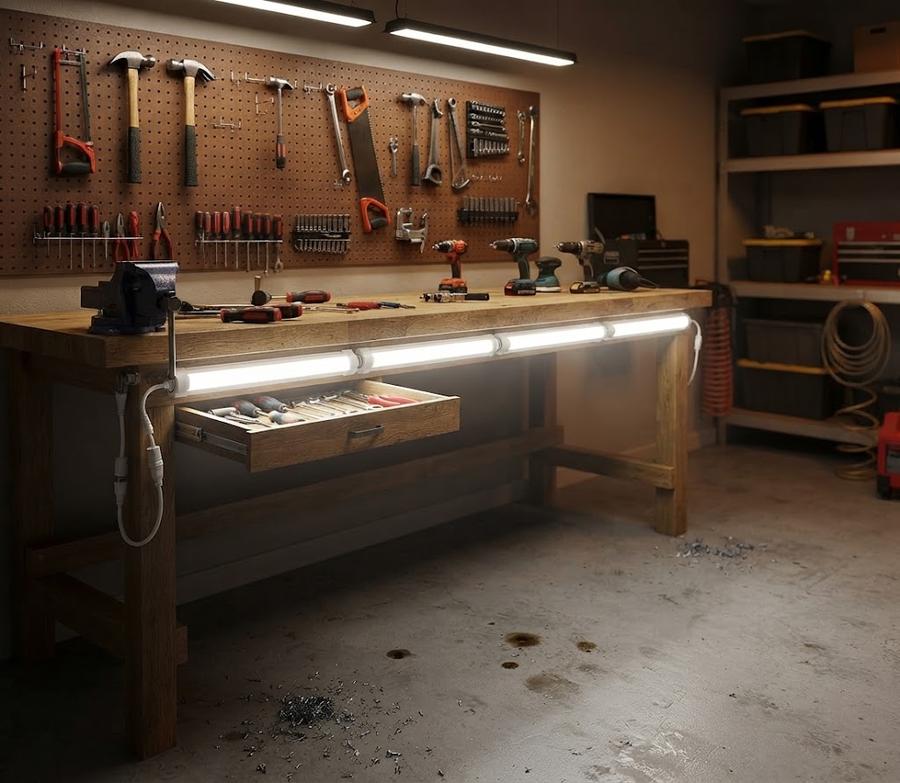
Hang six of these over a two-bay garage on a Saturday and every bench, shelf, and floor jack sits under 2,640 lumens of 6000K daylight by dinner. Each fixture arrives integrated: driver, board, and diffuser in one aluminum housing with a corded on/off switch, so nothing gets wired to a ballast because no ballast remains. Where a fluorescent strip needs a starter and a warm-up minute on a cold morning, this one strikes full output the second the switch clicks. ETL-listed, warranted two years, and the most-reviewed fixture here at 4.6 stars over 144 verified reviews. Check today's price.
2,640 lumens per fixture covers a two-bay bench without a clamp lamp in the corner
Link cords chain four fixtures on one feed, held under the 100W circuit cap
4.6 stars across 144 verified buyer reviews, the highest volume in the range
Six fixtures clear a basement workshop in one evening: mount them to the joists, click the link cords together, and each throws 2,640 lumens across a 180-degree spread. The wider beam pushes light onto the walls instead of pooling it underfoot, which you notice the first evening you go hunting a box on the top shelf. Where a single ceiling bulb leaves basement corners grey after dark, the linked run flattens the shade between joists from the stairs to the back wall. Run the linked six-pack four hours a night and the ETL-listed driver's 50,000-hour rating covers three decades of evenings. If one quits in month seven, the 2-year limited warranty and the retailer's 30-day window take it back. Check today's price before ordering the six-pack.
A 180-degree spread reaches the top shelf, not just the floor under the fixture
Corded fixture reaches a wall socket, so the install skips the junction box and the breaker stays on all evening
A tube that dims in month seven ships back under the 2-year limited warranty, ETL-listed driver and all
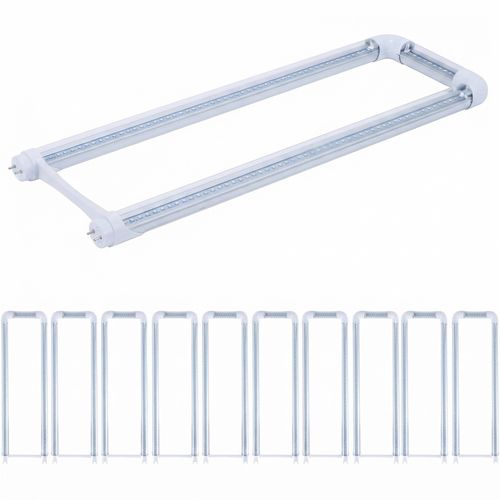
Drop-ceiling troffers in an older office take a U-bend rather than a straight tube, and swapping ten of them runs an afternoon and one screwdriver. Three-sided LEDs throw light out the flanks of the U as well as down, so the panel spreads 2,640 lumens evenly instead of showing two bright stripes through the lens. Where a fluorescent U-bend shatters into mercury dust when a ladder clips it, this one is shatterproof and carries no mercury, UV, or IR. Goes in on a simple ballast bypass, with 2-year limited warranty cover on all ten. Check today's price.
Ten U-bends refit a small office troffer ceiling in a single afternoon
Three-sided emission fills the troffer lens instead of striping it
Shatterproof body, no mercury to bag as hazardous waste after a drop
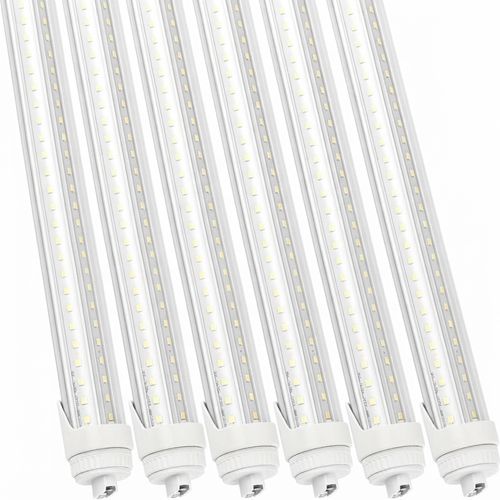
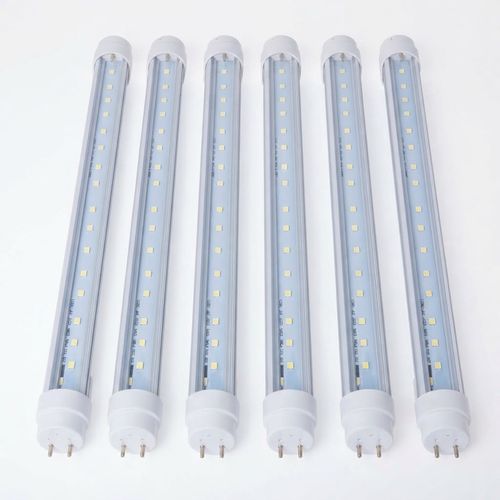
Display cases and older 2FT fixtures often use an R17d twist base, and the tube ends up aimed at the ceiling unless it turns in the socket. This cap rotates a full 360 degrees, so 2,200 lumens off a 270-degree dual-row board point wherever the shelf actually sits. Where a fixed-pin tube forces you to remount the whole fixture to redirect light, this one twists by hand once seated and stays put. Safety-listed, with 2-year limited warranty cover on the six-pack. Confirm your fixture takes R17d rather than G13, then check today's price.
Twist the seated tube by hand to aim 2,200 lumens at the shelf, not the ceiling
R17d cap rotates 360 degrees while the dual-row board holds a 270-degree spread
ETL-listed, 2-year limited warranty on the six-pack
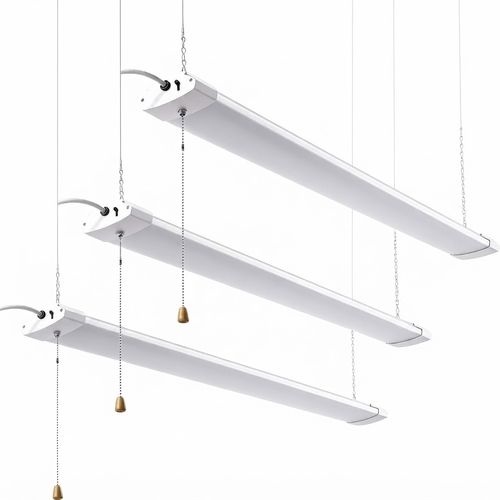
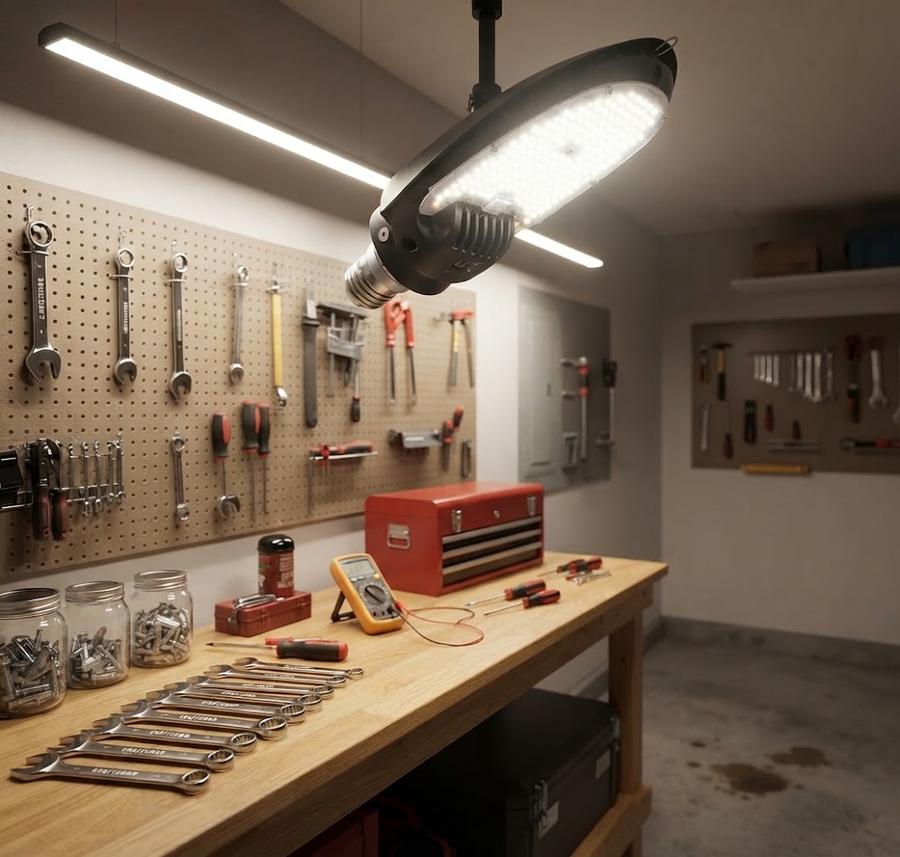
A garage that works as a shop by day and a hangout at night wants two different lights, and a selector on the housing gives both. Slide it to 3000K, 4000K, or 5000K and the same 6,000-lumen fixture moves from warm to daylight without swapping hardware, while a pull chain kills it from the floor. Where a 150W fluorescent strip burns four times the power for less output, this draws 48W and links three fixtures on one plug. Hangs on the included chains or flush-mounts to the ceiling. ETL-listed, 2-year limited warranty, and dimming is not supported. Check today's price.
Slide the selector at 8 p.m. and the shop light drops to 3000K warm without a hardware swap
48W drives 6,000 lumens where the 150W fluorescent it replaces made less
Two-year limited warranty; note that dimmer switches are unsupported
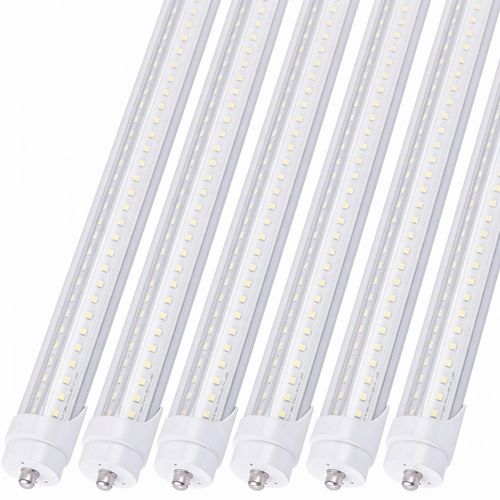
Older 4FT strip fixtures with one pin at each end take an Fa8 cap, and a standard G13 tube will not seat in them at all. The dual-row V-shaped board spreads 2,640 lumens through 270 degrees, so a single-pin retrofit lights an aisle as wide as the two-lamp fluorescent it follows. Where that old single-pin tube pulled 65W to reach the same brightness, this one settles at 24W and stops humming. ETL-listed with a 2-year limited warranty. Check the end cap of your old tube for a single centre pin before ordering, then check today's price.
Single-pin Fa8 fixtures retrofit without new housing, at 2,640 lumens per tube
Dual-row V board spreads output through 270 degrees instead of a flat downward strip
24W replaces the 65W draw of the single-pin fluorescent it follows
Under-cabinet runs and low basement ceilings need a slim fixture, and this T5 profile hangs off a mounting clip at well under a pound. 20W drives 2,200 lumens of 6000K through an integrated housing that plugs into a wall outlet, so no junction box gets opened and no wire nut gets twisted. Where the 55W fluorescent it replaces waits on a ballast and a starter, this one comes up instantly off a corded switch. ETL-listed, mercury-free, rated 50,000 hours, with a 2-year limited warranty. Keep the linked run under 100W per circuit, then check today's price.
Clips under a kitchen cabinet and lights the counter at 2,200 lumens, no wiring box
20W integrated driver replaces the 55W fluorescent tube plus its ballast
ETL-listed and mercury-free, with a 2-year limited warranty
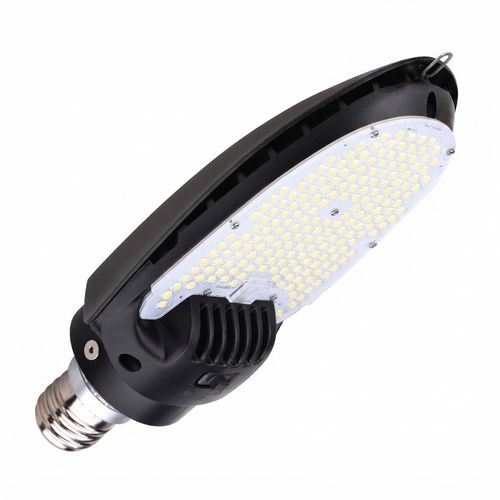
Dusk hits and the lot waits: a metal halide head needs a long warm-up before anyone can read a plate at the far end. This retrofit threads into the same E39 mogul socket and puts out 16,100 lumens at 140 lumens per watt, with an aluminum heat sink and a built-in fan holding the chips at temperature. Where the halide wants a fresh ballast every few years, this runs ballast-free and switches between 75W, 95W, and 115W on the housing. UL-listed with a 2-year limited warranty, rated 50,000 hours, roughly 23 years at six hours a night. Check today's price.
Lights a lot at 16,100 lumens the second the photocell closes, no warm-up
Heat sink and internal fan sustain 140 lumens per watt off SMD3030 chips
UL-listed rather than ETL, the only bulb here tested to that mark
Four batten fixtures daisy-chained down a workshop ceiling come up together on one pull chain, fed from a single outlet at the end of the run. Each holds 5,280 lumens of 5000K daylight behind a polycarbonate shade, and the slim aluminum body flush-mounts to the ceiling or hangs from the chains in the box. Where a bare bulb on a joist throws a hard shadow off every rafter, a linked batten run flattens light across the whole floor. ETL-listed, with a five-foot cord and a pull chain included. Keep the chained load inside the circuit cap, then check today's price.
Four linked battens light a workshop floor from one outlet and one pull chain
Polycarbonate shade diffuses 5,280 lumens so rafters stop casting hard shadows
Flattens the shadow a bare joist-mounted bulb throws across a shop floor
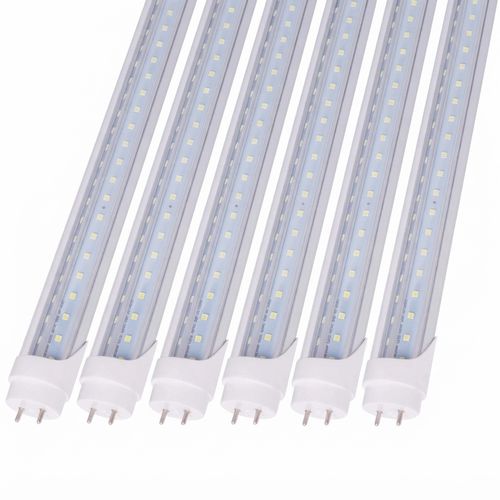
A 5FT fixture over a warehouse aisle usually holds two tired fluorescents; these dual-row tubes take their place at 48W with 270 degrees of coverage. Two rows of LEDs on a V-shaped board wrap light around the tube body, which is why the throw lands on the shelf face and not only on the concrete. Where a T12 fades every year until the aisle needs a second fixture, these hold their level against a 50,000-hour rating. Fits G13 bi-pin sockets in T8, T10, and T12 housings on a straight ballast bypass. Measure pin to pin first, then check today's price.
48W dual-row tubes light a warehouse shelf face, not only the aisle floor
V-shaped board wraps output through 270 degrees around the tube body
Holds output where a fading T12 forces a second fixture into the aisle
Five-foot fixtures in a barn or a long garage bay run 59.5 inches pin to pin, a size most hardware aisles skip entirely. A milky diffuser over the dual-row board softens 48W of output, so the tube reads bright without a glare line down the windscreen of whatever is parked underneath. Where the fluorescent it replaces drew 60% more power and hummed through a ballast, this one direct-wires past the ballast in a single pass. Rated 50,000 hours and carried by a 2-year limited warranty. Bench-test all six on arrival while the return window is open, then check today's price.
Fits the odd 5FT barn fixture hardware aisles skip, once you measure pin to pin
Milky diffuser softens the dual-row glare over a parked windscreen
2-year limited warranty after the retailer's 30-day return window closes
Walk into a -30C freezer at 5 a.m. and a standard shop light has either stalled or already died from condensate sitting in its driver. An IP54 seal keeps moisture off the board while the tube runs anywhere from -30C to 45C, pushing 4,400 lumens through a 270-degree dual-row lens. Where a chilled-room fixture is rated for a back cooler and quits below freezing, this one is built for the freezer itself. Four units link with the included Y-wire off a single plug and go up in about five minutes. No NSF food-zone rating is claimed. Check today's price.
Holds 4,400 lumens through a defrost cycle in a walk-in running at -30C
IP54 seal blocks condensate from the driver, the usual freezer failure point
Rated to -30C where chilled-room tubes stop at cooler temperatures
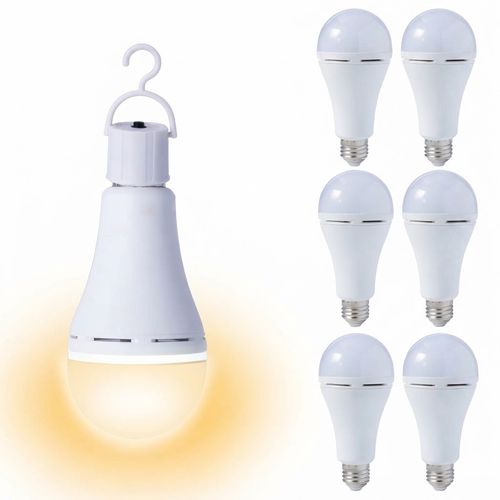
The grid drops at nine on a winter night and the hallway lamp stays lit, because this bulb has been charging in that socket all week. It burns as an ordinary 9W E26 bulb at 900 lumens and tops up its own cell while it works, then switches to battery for three to four hours once power cuts. Where a flashlight takes two minutes of drawer-rummaging in the dark, this one is already lit in the socket you left it in last week. Unscrew it and hang it from the base hook over a camp table, where the warm 3000K stays liveable for the whole four-hour burn; check today's price.
One charged bulb in the hallway socket covers the first evening of an outage
Charges its own cell in a standard E26 socket through a normal week of hallway use, no separate charger
No two-minute torch hunt in a dark hallway; the bulb is already lit the second the grid drops
From a bypass rewire in a home garage to a walk-in freezer holding at -30C, the installs this range covers.
Rewire Around a Dead Ballast Without a Second Service Call
Stand under a humming 5FT shop fixture at 10 p.m. and the ballast is drawing watts on top of the tubes it feeds. Pull it, cap the leads, and the G13 bi-pin tube runs on line voltage for the rest of the fixture's life. The housing never leaves the ceiling, and the ladder comes back down inside one evening. What most listings skip: a dual-end tube puts live voltage at both ends, so check the old tombstones before the tube goes in.
Cap the old ballast leads with wire nuts and the 5FT tube fires on line voltage in under ten minutes.
Flip the breaker back on and the tube strikes off 110V that second: its driver sits inside the aluminum body, not a separate ballast can.
Where a ballast-compatible tube dies the day the ballast does, a bypassed tube outlives the fixture holding it.
Screw a Corn Bulb Into a Parking-Lot Shoebox at Dusk
A 600W metal halide head takes twenty minutes to reach full output and sheds lumens every year after. The E39 corn bulb threads into that same mogul socket and hits 16,100 lumens the second the photocell closes. Twist the 270-degree neck once at install and the beam lands on the asphalt instead of the neighbour's window; the old ballast comes out in the same five minutes.
Set the wattage switch to 75W, 95W, or 115W before you climb down, so the pole draws only what the lot needs.
The bulb still holds 140 lumens per watt into year three because an aluminum heat sink and a built-in fan pull heat off the SMD3030 chips.
Where a fresh metal halide lamp needs a new ballast and a rented bucket truck, this one goes up a ladder in ten minutes with a glove.
Keep a Walk-In Freezer Lit at -30C Through a January Restock
Below -20C most shop lights quit before the compressor does: diffusers craze, drivers stall, and the walk-in goes dark. The 5FT cooler tube carries an IP54 seal and runs from -30C to 45C, so it strikes the moment the door swings open on a restock morning. Wipe frost off the housing on the Monday restock and the 4,400-lumen output holds through every defrost cycle that week.
Stack cases under the tube at 5 a.m. and it lights the back wall of the box with no warm-up delay.
The IP54 seal keeps condensate off the driver through four defrost cycles a day, the same water that kills an unsealed tube inside one season.
Where a standard shop light is rated for a chilled back room at 5C, this one runs the freezer aisle at -30C season after season.
50,000 rated hours works out past twenty years at six hours a night, longer than most owners keep the building. Watch the bench under one tube through a full winter and the light never strobes: ETL tested that driver for shock and fire risk. The UL-listed E39 corn bulb wants no starter and no ballast, and in year twenty it goes in the bin, not a mercury run.
Mount the 4FT fixture over the workbench and the ladder goes back on its hook: no starter to swap each spring, no ballast to hum.
Run a hand along the aluminum body after four hours lit and it reads warm, not hot, because that body sheds driver-killing heat.
Where a fluorescent tube fades every year and needs hazmat handling at the end, these hold output and go in the bin.
Why the Tubes Outlast the Fluorescents They Replace
Swap a flickering 4FT fluorescent for a 24W tube and the bench holds 2,640 lumens at 6000K past year two — one catch below.
Cut the Lighting Draw by 60-80%
Swap six 4FT fluorescent tubes for the 24W LEDs and that six-fixture run draws under 150 watts at the panel.
50,000 Rated Hours Before the First Swap
A fluorescent tube in the same fixture wants swapping every two or three years; this one outlasts several of those cycles before the ladder comes off its hook.
ETL Listing Sits on the End Cap
Check the endcap for the ETL stamp before you wire the fixture in — an independent lab ran that driver through shock and fire testing, not the seller's own bench.
Two-Year Limited Warranty, Written Per Product
A tube that quits in month seven falls under the 2-year limited warranty; inside the first 30 days it ships back through the retailer.
Mercury-Free Tubes Turn a Drop Into a Sweep-Up
Knock a fluorescent off the workbench and mercury vapor shuts the shop for a hazmat sweep; drop one of these and a broom clears it in under a minute.
900 to 16,100 Lumens Across the Range
Screw the 900-lumen emergency bulb into a hallway lamp for a four-hour outage, or hang the 16,100-lumen corn bulb over a parking lot before dusk.
The Numbers Most Tube Pages Leave Out
Chain limits, a -30C freezer rating, and hours of battery runtime: the figures you check before ordering a case of tubes.
3-4 fixtures / 100W circuit cap
Chain four 4FT shop lights off one feed and the run sits under the 100W cap; the fifth fixture is what trips a standard breaker.
Read a linkable shop light page for ten minutes and the link cord is pictured every time, never the count of fixtures one 15A circuit carries.
Manufacturer daisy-chain load spec
-30C to 45C (IP54)
Mount the cooler tube in a walk-in that holds -30C and it strikes on the 5 a.m. restock, where a chilled-back-room fixture would already have stalled.
Scan a rival cooler tube's spec sheet and IP54 sits there alone — no low-temperature limit to check before you mount it in a -30C walk-in.
Manufacturer operating-temperature spec
3-4 hrs battery runtime
When the grid drops at 9 p.m., the rechargeable A21 bulb runs three to four hours on its own battery, enough to find a flashlight and ride it out.
Read the emergency bulb pages side by side and every one claims battery backup; almost none says how many hours the cell holds once the grid drops.
Manufacturer runtime spec
60-80% lower draw
Swap a fluorescent run for these tubes and the meter reads 60-80% lower on the lighting line, which is what the wattage math gives.
Add up a fluorescent shop's monthly bill and the savings claim on most tube pages never pins itself to a percentage you can check against it.
Manufacturer wattage spec vs fluorescent equivalents
16,100 lm at 140 lm/W
Retire a 600W metal halide parking-lot lamp for the E39 corn bulb and the pole puts out 16,100 lumens at 140 lumens per watt, with no new ballast.
Line up two corn-bulb pages before you climb the pole and both hand you a metal-halide wattage swap, neither the lumens-per-watt figure to compare on.
Manufacturer spec, 75W/95W/115W E39 corn bulb
4.4 stars / 249 reviews
Owners buying across the tube and shop-light range rate it 4.4 stars over 249 verified reviews, written after daily garage and warehouse use.
Open a no-name tube page and you see a rating on that item alone, never a verified count built across a year of daily-use buyers.
249 verified buyer reviews, aggregated across the range
From Ladder to Light Without an Electrician Callback
A 4FT fluorescent fixture goes LED in one evening: measure it, pick the wiring type, mount, power on.
1
Measure the Old Tube
Read pin-to-pin length before ordering: a 5FT tube measures 59.5 inches, not a round 60.
2
Pick Bypass or Plug-and-Play
Direct-wire G13 tubes cut the ballast out; integrated shop lights plug into a wall outlet instead.
3
Mount and Link the Run
Chain four 24W fixtures off one feed and the load stays under the 100W circuit cap.
4
Power On, Check the End Cap
The driver strikes at full output, so no ten-second fluorescent warm-up flicker follows the switch.
Where each fixture lands between 3.6 and 4.6 stars
Verified buyers writing after a season of garage, warehouse and parking-lot use, including the tube that arrived dead.
5.0
Six of these went up over a two-bay garage on a Saturday afternoon and the difference under the hood is the part I did not expect. The old fluorescents left the engine bay in shadow no matter where I stood. Now the whole floor reads evenly and I stopped dragging a work lamp around. Link cords chained four of them off one outlet with no drama. Two winters in and none has flickered on a cold start.
Dale W., OhioVerified Purchase
4FT 24W Linkable LED Shop Light, 6-Pack
4.0
Bright, and the plug-and-play cord meant no electrician. My one gripe is the mounting hardware: the chain hooks felt light for a joist install, so I swapped them for lag screws out of my own bin. Ten minutes extra. Everything else did what the listing said, including the instant-on. No warm-up on a 40 degree morning is worth more than I thought it would be.
Marisol R., TexasVerified Purchase
4FT 24W Linkable LED Shop Light, 6-Pack
4.0
Ten U-bends went into a drop ceiling in an older dental office. The bypass on each troffer took about four minutes once I had the pattern down, so a ten-fixture afternoon was realistic. Light spreads through the lens instead of showing two hot stripes, which the previous tenant's tubes did. Docked a star because one arrived with a scuffed end cap. It still works fine.
Greg P., IllinoisVerified Purchase
2FT U-Bend T8 LED Tube 24W, 10-Pack
3.0
Five of the six run great in a barn bay and put out plenty for the length. The sixth was dead out of the box. I caught it on the bench before climbing, which is the only reason this is not a one-star. Replacement went through the return window without an argument. Bench-test them all before you go up the ladder and this is a solid tube for an odd fixture size.
Ken A., MissouriVerified Purchase
5FT 48W T8 LED Tube, G13 Bi-Pin, 6-Pack
5.0
Warehouse aisle, two tired T12s per fixture, replaced with these. The dual-row throw actually reaches the shelf faces rather than dumping everything on the concrete, which is what I was after. Pin-to-pin measured a hair under sixty inches like the description warned, so measure first. Six months of ten-hour days and the output looks identical to week one.
Priya N., GeorgiaVerified Purchase
5FT 48W T8 LED Tube, G13 Dual-Row, 6-Pack
5.0
Swapped a 600 watt metal halide head on a small lot pole. The corn bulb threaded into the same mogul socket and lit the asphalt the second the photocell closed, no warm-up wait. I set it to 95 watts because the lot did not need the full output. The rotating neck let me aim it away from the neighbouring building, which the old fixed lamp never allowed.
Ray T., ArizonaVerified Purchase
E39 LED Corn Bulb, 75W / 95W / 115W
5.0
Four battens daisy-chained down a workshop ceiling and they all come on from one pull chain at the end of the run. Rafters used to throw hard shadows off a bare bulb over my table saw. That is gone. The polycarbonate shade spreads it flat across the whole floor. Flush-mounted mine rather than hanging them, and the slim body sits close enough to the joist to stay out of the way.
Tomasz K., PennsylvaniaVerified Purchase
4FT 48W Linkable Batten Light, 4-Pack
4.0
Bought two after a hurricane week with rolling outages. They sit in ordinary hallway lamps and charge themselves, then keep burning when the power drops. Ran about three and a half hours on the last outage, which matched the claim. The warm colour is easier to live with at night than a daylight bulb would be. Only note: the base hook is small, so it hangs but does not clip.
Anita C., FloridaVerified Purchase
A21 Rechargeable Emergency LED Bulb 9W
The Fluorescent Tube Replacement Brand That Leads With the Certificate
Pull the old T8 out of your fixture and the question narrows to three things: which base, which length, and whether the ballast stays or goes. You will find G13 bi-pin, Fa8 single pin, R17d twist, E39 mogul, and E26 screw here, from a 2FT stub up to a 115W corn bulb.
The one-star photo lands first: a 4FT tube that lit for a day, or two dead out of six in the box. That risk you are already pricing in is why this spec sheet opens with certification and warranty rather than brightness adjectives. Across the tube and shop-light range, buyers have left 249 verified reviews at a 4.4-star average, and the 4FT shop-light six-pack you will see most often sits at 4.6 stars over 144 of them. Read what that average hides: ratings run from 3.6 to 4.6 depending on which fixture you pick, and each product card below prints its own rating rather than the average.
Your fixture decides the rest. Measure your pin-to-pin length, check whether your old tube ends in a G13 bi-pin, an Fa8 single pin, or an R17d twist, and a tube that matches yours exists from a 2FT 20W stub up to a 115W corn bulb.
One garage owner running six 4FT fixtures six nights a week swapped 55W fluorescents for the 24W tubes: the same 2,640-lumen bench light, roughly a third of the panel draw, and no ten-second warm-up on a 40F morning. WAHADI LED LLC is the manufacturer of record on those tubes, the freezer fixtures, and the emergency bulbs.
The failures that turn a 30-minute swap into a lost weekend: dead units, wrong bases, a warranty nobody can find.
Two Tubes Out of Six Arrive Dead
Dead-on-arrival units are real in this category, and no seller who says otherwise is worth trusting. Put each tube in a lamp or a known-good fixture on the bench first, never straight onto the ceiling. A dud caught on day two ships back through the retailer's return window; a dud found in month four costs a second install.
Test all six within the 30-day window
The Old Ballast Strobes, Then Takes Ten Seconds to Wake
A cold morning start on an aging fluorescent gives you a strobe, a hum, then dim output creeping up over ten seconds. Cut the ballast out and line voltage reaches the driver directly, so the tube sits at its full 2,640 lumens before your hand leaves the switch.
A Cracked Fluorescent Puts Mercury on the Shop Floor
Break a T12 over a workbench and the cleanup runs to airing out the room and bagging debris as hazardous waste. These tubes carry no mercury, no UV, and no IR, so a dropped one is a broom problem and the bench is usable again in a minute.
Wrong Base, Wrong Length, Wrong Weekend
T8, T10, and T12 all look identical from the floor, and a 5FT tube runs a fraction under sixty inches pin to pin rather than the round number you would assume. Measure the old tube end to end and read the pin type first: G13 bi-pin, Fa8 single pin, R17d twist, E39 mogul, and E26 screw do not cross over.
Nobody Answers in Month Seven
The failure owners actually fear lands after the return window closes, when a fixture quits and the seller has gone quiet. A 2-year limited warranty is printed on most of the tubes and shop lights here, and the first 30 days run through the retailer's return process. Keep the order record; that is what a warranty claim asks for.
The box lands, and the next 50,000 hours start with one evening on a ladder and one power bill.
Day 1
Day 1, after close: unpack the six-pack on the shop floor and power one tube on the bench before anything goes up the ladder. A tube that stays dark ships back through the retailer's 30-day return window instead of costing you a second climb.
Week 1
Week 1: link four 24W fixtures off one feed, watch the breaker hold as the fourth one comes on, and notice the far corner of the bay no longer needs a clamp lamp.
Month 1
Month 1: the utility bill arrives with the lighting line at roughly a third of what the fluorescent run pulled, and nobody has heard a ballast hum since install night.
Year 1+
Year 1 and past it: the tubes still throw 6000K daylight over the bench, the 2-year limited warranty is still live on most fixtures, and the ladder stays folded in the corner.
Facilities buyers ordering 4FT tubes by the case, garage owners with one dead fixture, and grocery managers lighting a -30C walk-in all start at the same pin-to-pin measurement.
The Facilities Buyer Rewiring a Warehouse Bay Before Winter
You order by the case, and one dead unit found on the ceiling costs a half-day lift rental to discover. Bench-test all six tubes the morning the pallet lands, inside the 30-day window: the dud becomes a return, not a warranty claim.
The Garage Owner With One Flickering 4FT Fixture Tonight
The strobe over your workbench started last winter and has been getting worse since. A 24W integrated shop light hangs off the chains already in the ceiling and throws 2,640 lumens the moment you pull the switch.
The Grocery Manager Whose Walk-In Sits at -30C
Standard shop lights fail inside a freezer within a season, usually when condensate reaches the driver. The sealed 5FT cooler tube holds from -30C to 45C, though it carries no NSF food-zone rating, which some inspectors will ask about.
The Property Manager Reading Certification Marks Before a Bulk Order
Check the end cap for a listed safety mark before signing a bulk order. You explain an uncertified driver to an insurer the week a claim lands, not before. Read ETL on the tubes and UL on the E39 corn bulb, then budget rebate paperwork separately: DLC is not there.
Where these are the wrong buy
Not the right fit if you need DLC-listed fixtures to qualify for a utility rebate program, because none of these tubes carry DLC certification.
Skip the tube and shop-light range if the circuit runs through a dimmer switch: dimming is explicitly unsupported and the driver will buzz or drop out.
Not for a food-prep zone where an NSF-rated fixture is required, since the cooler tube's IP54 seal is a different certification entirely.
Why the Spec Sheet Reads Like This
WAHADI prints an ETL or UL mark on the end cap, a 2-year limited warranty line per product, and three named gaps (no DLC, no dimming, no NSF rating) straight into the buyer section above.
Certified, Not Just Claimed
Turn a tube end-cap toward the light and the ETL mark reads straight off the aluminum print. An inspector walking your bay confirms it in seconds, because an independent lab shock-tested and fire-tested that driver before the mark was allowed on.
A Range, Not a Superlative
Set a 24W tube beside the 55W fluorescent it replaces: the draw falls 56 percent, not the 90 a headline would prefer. Both ends of the 60-to-80 percent range come off wattage math you can redo on your own fixture label in under a minute.
Warranty Printed Per Product
Read the warranty line on each product page before the case ships: most tubes print an explicit 2-year limited term. A few print none, and that difference stays visible per product instead of averaging into one blanket claim you discover at month fourteen.
The Gap Is Named Up Front, Not in the Fine Print
Read the three disqualifications above before you add anything to a cart: no DLC listing, no dimmer support, no NSF rating. That disclosure sits ahead of the buy button, where it can still change your order, not in a warranty PDF you open in month three.
Bases, ballasts, breakers and warranty claims
Measuring pin to pin, bypassing a ballast, chaining fixtures on one circuit, and what a claim needs in month seven.
What does WAHADI actually make?
WAHADI LED LLC builds fluorescent-replacement lighting: T8 and T5 tubes in 2FT, 4FT, and 5FT lengths, integrated shop light fixtures with corded switches, plus a waterproof cooler tube, an E39 corn bulb for parking-lot poles, and a rechargeable emergency bulb. Nearly everything carries a 50,000-hour rating, and most tubes and shop lights are ETL-listed with a 2-year limited warranty.
Are LED shop lights better than fluorescent tubes?
On draw, output stability, and disposal, LED wins outright. A 24W LED tube produces the 2,640 lumens a 55W to 65W fluorescent gave when new, which is where the 60-80% energy figure comes from. Fluorescents also dim measurably every year, so a three-year-old tube is noticeably darker than the day it went in, and they hum through an ageing ballast on cold mornings. The mercury inside turns a broken tube into a hazardous-waste cleanup with a ventilation step. An LED tube holds its output toward a 50,000-hour rating and sweeps up as plastic if it hits the floor.
What is the difference between a shop light and a tube light?
A tube light is the lamp alone: a 4FT T8 tube that drops into a fixture you already own. A shop light is the whole fixture, with driver, board, diffuser, mounting hardware, and usually a power cord with a switch built into one housing. Buy tubes when the fixture is sound. Buy shop lights when the housing is corroded, wrong-sized, or missing entirely.
Do these LED shop lights need a ballast?
None of them run on a ballast. Integrated shop lights carry a driver inside the housing and plug into a wall outlet. The G13 bi-pin tubes are direct-wire: pull or bypass the ballast, cap its leads, and feed line voltage to the sockets.
How many lumens do I need for a garage or shop?
Plan roughly 50 lumens per square foot for a working garage, and closer to 75 over a bench where you read torque specs or thread small fasteners. A standard two-car garage of about 400 square feet lands near 20,000 lumens, which is eight 4FT fixtures at 2,640 lumens each. Under-lighting a bench is the mistake people notice first.
What colour temperature is best for a garage or workshop?
6000K daylight white suits a work area, because cool light holds contrast on metal, wiring colours, and printed labels. Most tubes and shop lights here ship at 6000K for that reason. A 5000K option reads slightly softer and works well in a mixed-use space, and the 3CCT shop light switches between 3000K, 4000K, and 5000K when the garage doubles as a hangout after work.
Who are these tubes and fixtures aimed at?
Garage owners replacing a flickering fixture, facilities buyers swapping a warehouse run by the case, grocery managers lighting a walk-in, and property managers who check certification marks before a bulk order. The common thread is retrofit rather than new construction: an existing fixture, an existing socket, and a fluorescent tube that has reached the end of its life.
How bright are these, from the dimmest to the brightest?
Output runs from 900 lumens on the rechargeable A21 emergency bulb up to 16,100 lumens on the E39 corn bulb. Tubes and shop lights sit in between: 2,200 lumens on the 2FT and the T5, 2,640 lumens on the 4FT 24W models, 4,400 on the cooler tube, 5,280 on the batten fixture, and 6,000 on the 48W 3CCT shop light.
What wattages are available?
Nine watts to 115W. The rechargeable bulb draws 9W, the 2FT tube and the T5 fixture 20W, most 4FT tubes 24W, the cooler tube 30W, the 5FT tubes 48W, and the corn bulb switches between 75W, 95W, and 115W.
Are these Type A ballast-compatible or Type B direct-wire tubes?
The G13 bi-pin tubes are Type B direct-wire units. The ballast comes out or gets bypassed, and line voltage reaches the sockets directly. They are not Type A and will not run off an existing ballast, and there is no Type A+B dual-mode option in the range. Integrated shop lights sidestep the question, since they plug into a wall outlet.
Are these tubes DLC certified?
No DLC listing exists on any of these tubes or fixtures. If a utility rebate program requires DLC qualification, this range will not satisfy the paperwork, and that is worth checking before you order for a commercial retrofit. Safety certification is a separate question, and that box is ticked: the tubes carry an ETL mark and the corn bulb carries UL.
Can I use these on a dimmer switch?
Dimming is unsupported across the tube and shop-light range, and the 48W 3CCT fixture states it outright on the page. On a dimmer circuit the driver typically buzzes, flickers, or drops out at the low end, and running it that way shortens its life. Wire these to a plain on/off switch. Switching colour temperature on the 3CCT model is a separate control, not dimming.
What base types do the tubes use?
Five bases appear across the range and none of them interchange. G13 bi-pin covers the standard 2FT, 4FT, and 5FT tubes. Fa8 is a single centre pin used by older strip fixtures. R17d is a rotatable twist base found in display cases. E39 is the mogul socket for the corn bulb, and E26 is the ordinary screw socket for the emergency bulb.
What tube lengths can I get?
Tubes come in 2FT, 4FT, and 5FT. The 2FT covers under-cabinet fixtures, display cases, and U-bend troffers. The 4FT is the common shop and garage size. The 5FT measures 59.5 inches pin to pin rather than a round 60, a detail worth confirming against your fixture before ordering, because a 5FT socket spacing is not standardised across older housings.
What is the CRI and beam angle?
Colour rendering runs 85 to 90 across the tubes, high enough to read wire insulation colours and paint shades accurately under work light. Beam angle varies by build: 120 degrees on the standard integrated shop lights, 180 on one 4FT model, 270 on the dual-row V-shaped tubes and the cooler tube, and 270 rotatable on the E39 corn bulb.
What does the 3CCT switchable shop light actually change?
A selector on the 48W fixture moves the light between 3000K warm white, 4000K natural white, and 5000K day white while output stays at 6,000 lumens. Nothing gets swapped and no app is involved: you slide the switch and the LEDs shift tone. This applies to that one shop light and is not a feature across the rest of the range.
How does the adjustable wattage on the corn bulb work?
A switch on the bulb housing selects 75W, 95W, or 115W before installation, so one bulb covers three brightness levels. Set it on the ground rather than at the top of a ladder. At full 115W the bulb delivers 16,100 lumens at 140 lumens per watt, enough to stand in for a 600W metal halide lamp.
How long does the emergency bulb run on battery?
Three to four hours on a full charge, at 900 lumens. The cell tops up whenever the bulb is powered, so one living in a hallway lamp stays ready with no maintenance routine.
What does IP54 mean on the cooler tube?
IP54 describes dust and splash resistance: protected against dust ingress and against water sprayed from any direction. On a freezer tube that matters less for rain than for condensate, which is what kills an unsealed driver during a defrost cycle. The rating pairs with an operating range of -30C to 45C, which is the number that actually decides whether a tube survives a walk-in.
How long is the warranty and who handles a claim?
Most tubes and shop lights carry a 2-year limited warranty stated on the product page, and a few units list none, so read the page for the specific item rather than assuming it applies across the board. Inside the retailer's first 30 days a fault is a straight return, which is the faster path and needs no correspondence at all. After that window closes, a claim goes to the manufacturer under the limited terms and wants your order number and purchase date. Keep the invoice email. The remedy named is replacement rather than repair.
What happens if a tube arrives dead on arrival?
Test every tube against a wall socket or a known-good fixture as the box opens, before anything goes up a ladder. A dead unit found inside the retailer's 30-day window is a straight return or replacement. Past that window it becomes a warranty claim under the 2-year limited terms. Keep the packaging until all six have been tested; it saves an argument later.
Are these ETL listed, and what does that mean?
ETL listing appears on most of the tubes and shop lights, and it means an independent laboratory tested samples against the same North American safety standards UL publishes, then authorised the mark. It covers shock and fire risk in the driver and wiring, not brightness or lifespan claims. The E39 corn bulb carries UL instead. Electrical inspectors accept either.
Is ETL as good as UL?
Both marks certify against identical safety standards and both are recognised by OSHA as testing laboratories. An electrical inspector treats them as equivalent. What matters is that a mark exists at all, since uncertified imported tubes often carry none.
Who is the manufacturer behind these?
WAHADI LED LLC is listed as the manufacturer of record on the product pages. It is a private-label lighting maker rather than a legacy fixture brand, which is common in this category and is exactly why certification marks and warranty terms carry more weight than brand recognition. Check for the ETL or UL stamp on the end cap when the box arrives.
What do the buyer ratings actually look like?
The range averages 4.4 stars across 249 verified reviews, and that average hides a real spread. The 4FT 24W shop light six-pack sits at 4.6 stars over 144 reviews, while one 5FT tube runs closer to 3.6. Several newer items carry no reviews at all yet. Read the rating on the specific item rather than the brand-level number.
Do these tubes run hot enough to be a fire risk in an enclosed fixture?
LED tubes run far cooler than the fluorescents they replace, and the aluminum body works as a heat sink to carry warmth away from the driver. That said, a fully enclosed fixture with no airflow traps heat and shortens driver life regardless of brand. The ETL listing covers shock and fire testing on the driver. For a sealed fixture, prefer a model rated for it.
Is there support if something fails after installation?
The manufacturer runs a customer support desk reachable through the product listing, and the warranty terms name replacement rather than repair as the remedy. Keep your order number and note the date of installation. Practically, the fastest path is testing everything inside the 30-day return window, because a return needs no correspondence at all.
How many shop lights can I link together before tripping a breaker?
Three to four fixtures per run, with the combined load held under 100 watts on one circuit. Four 24W fixtures reach 96W, which is the practical ceiling, and a fifth pushes past it. The cap comes from the link cord and its connector rating rather than from the building wiring, so a longer bay wants splitting into two runs fed from separate outlets. Exceeding it does not usually trip the breaker first; it overheats the connector between fixtures. Count watts rather than fixtures when a 48W shop light joins the run.
Do I need an electrician for a ballast bypass installation?
A bypass means killing power at the breaker, removing or capping the ballast leads, and wiring line voltage to the tombstones. Confident DIY owners do this routinely and the tubes ship with a wiring diagram. Local code, rented premises, and commercial buildings often require a licensed electrician regardless of skill. If the fixture wiring is brittle or unlabelled, hire one.
Will the freezer tube actually survive a walk-in long term, or only a cold room?
The cooler tube is rated from -30C to 45C, which covers a genuine walk-in freezer rather than just a chilled back room. The IP54 seal does the long-term work: condensate stays off the driver while the box cycles through defrost. Check your freezer's actual running temperature against that lower limit before ordering, since some blast units go colder.
Is the cooler tube NSF rated for food storage areas?
No NSF certification is claimed on the cooler tube. IP54 addresses dust and water ingress, which is a different question from NSF's food-zone sanitation standard. Some health inspectors ask for NSF-listed fixtures directly over open food-prep surfaces. For a walk-in holding sealed cases, IP54 with the -30C to 45C range is usually the specification that matters.
Can the E39 corn bulb replace a metal halide parking lot fixture without a new ballast?
It replaces the lamp and the ballast together. The existing ballast must be removed or bypassed so line voltage reaches the E39 socket directly, since running an LED retrofit through a magnetic halide ballast wastes power and shortens the bulb's life. Once wired direct, the bulb threads into the same mogul socket and rotates 270 degrees to aim the beam.
Does the emergency bulb work in a regular lamp, or only a ceiling fixture?
Any standard E26 socket works: a table lamp, a hallway fixture, a garage pull-chain porcelain socket. It behaves as an ordinary 9W bulb while power is on and charges itself in the background. The base carries a hook, so during an outage you can unscrew it and hang it from a tent pole or a joist while it is still lit.
Can I use these tubes in a damp place like a car wash or an unheated garage?
The cooler tube is the one built for moisture: its IP54 rating covers dust and splash in parking garages, car washes, and cold storage. Standard indoor tubes and shop lights carry no IP rating and should stay dry. An unheated garage suits the standard tubes fine, as long as condensation is not dripping onto the fixture itself.
How do I light a shop with a 10-foot ceiling?
At that height, hang the fixtures down rather than mounting flush. Chains drop a 4FT shop light to roughly eight feet, where the same 2,640 lumens land on the bench instead of spreading thin across the room. Space fixtures about four to six feet apart along the work area, and add a linked run over any aisle you walk with your hands full.
Where should shop lights go in a garage?
Run them parallel to the workbench and slightly forward of where you stand, so your own shoulders stop casting a shadow onto the work. A second run down the centre of the bay covers the car. Corners holding shelving want their own fixture, because a centre-mounted light leaves the top shelf dark no matter how bright it is.
Should I choose 4FT or 5FT tubes?
Measure the fixture, do not guess from the room. Fixture length decides this entirely: a 4FT housing takes a 4FT tube and nothing else. The 5FT tubes measure 59.5 inches pin to pin, and older 5FT housings vary, so confirm socket spacing before ordering. If you are replacing the whole fixture, 4FT units are easier to source, mount, and link.
What is the difference between T8, T10, and T12 tubes?
The number is tube diameter in eighths of an inch: T8 measures one inch across, T10 an inch and a quarter, T12 an inch and a half. All three use the same G13 bi-pin end caps at the same lengths, which is why a T8 LED tube drops into a T12 fixture. Diameter changes nothing electrically once the ballast is bypassed.
How do these compare to Feit Electric or Sunco Lighting tubes?
On the spec sheet the differences are certification, warranty, and coverage. These carry ETL on most tubes with a 2-year limited warranty and cover five base types including Fa8 and R17d, which competitors stocking one base type often skip. Feit and Sunco specifications vary by individual product, so compare the exact item rather than the brand. Neither this range nor an equivalent generic tube carries DLC listing here.
Are branded LED tubes worth it over generic no-name ones?
The gap that matters is not brightness, it is whether anyone stands behind the unit. Generic tubes frequently ship with no safety mark, no warranty text, and no seller to contact in month seven. These carry ETL or UL and a 2-year limited warranty on most items. Both may come off similar production lines, but only one leaves you a claim path.
How does a 24W LED tube compare to a 60W fluorescent?
The LED matches the light and cuts the draw by roughly 60%. A 24W tube here produces 2,640 lumens, which is what a 55W to 65W fluorescent delivered on its first day. The gap widens with age: fluorescent output falls year on year while the LED holds its level toward a 50,000-hour rating, so after three years the practical difference is larger than a first-day comparison shows. The fluorescent also needs a ballast drawing its own power, which the wattage label on the tube never includes. Count the ballast and the real saving climbs further.
Are newer high-lumen tubes better than models from a few years ago?
Efficiency per watt has moved, and the dual-row V-shaped boards are the visible result: 270 degrees of spread instead of a flat downward strip from the same wattage. Older single-row tubes at the same 24W throw a narrower beam and leave shelf faces dark. The lifespan rating has stayed at 50,000 hours; the change is where the light lands.
How do I install these step by step?
Cut power at the breaker first. For an integrated shop light: mount to ceiling or joist with the included hardware or chains, plug in the cord, link the next fixture, restore power. For a direct-wire tube: open the fixture, remove or bypass the ballast, cap the unused leads, run line voltage to the sockets, seat the tube, restore power, test.
What do I do with the old fluorescent tubes?
Fluorescent tubes contain mercury and are not household waste in most jurisdictions. Many hardware retailers and municipal transfer stations take them free, and some run collection events for bulk quantities. Store the old tubes upright in the box the new ones arrived in until you can drop them off. Broken tubes need ventilating the area and bagging debris rather than sweeping it loose.
My new LED tube flickers or strobes. What is wrong?
Flicker on a fresh install almost always means the ballast is still in the circuit. A direct-wire tube fed through an old ballast strobes, pulses, or lights partially. Kill power, confirm the ballast leads are capped, and check that line voltage reaches the sockets. Flicker on a dimmer circuit is the same story with a different cause: these are not dimmable.
Why did one tube die early when the others kept working?
In a multi-lamp fixture, an early failure usually points at heat, a loose socket contact, or a manufacturing defect in that single driver. Check whether the failed position runs hotter or sits in an enclosed end of the housing. A tube that dies inside the 30-day window returns through the retailer, and one that fails later falls under the 2-year limited warranty.
Do I need to clean or maintain these?
Dust on a diffuser costs real output, and a workshop coats one within a year. Wipe the lens dry when you change the furnace filter. No starters, no ballasts, nothing else to service.
Can I replace just the tube if a shop light fails?
It depends which you bought. The integrated shop lights are sealed units, so the driver and LED board are not user-serviceable and a failure means replacing the fixture under warranty. The G13, Fa8, and R17d tubes are separate lamps, so a failed tube pulls out and a new one seats in the same fixture without rewiring.
The same range photographed where owners actually mount it.
4FT linkable shop lights over a two-bay garage bench5FT dual-row tubes lighting a warehouse aisle shelf faceSealed 5FT cooler tube inside a walk-in freezerE39 corn bulb retrofit in a parking-lot shoebox headU-bend tubes in a drop-ceiling office troffer3CCT shop light switched to warm over a workbenchLinked batten fixtures down a workshop ceilingRechargeable A21 bulb lit in a hallway lamp during an outage
Stay in the Loop
Get the WAHADI Shop-Light Sizing Guide plus new-model alerts: base types, tube lengths, and circuit-load math on one page.